

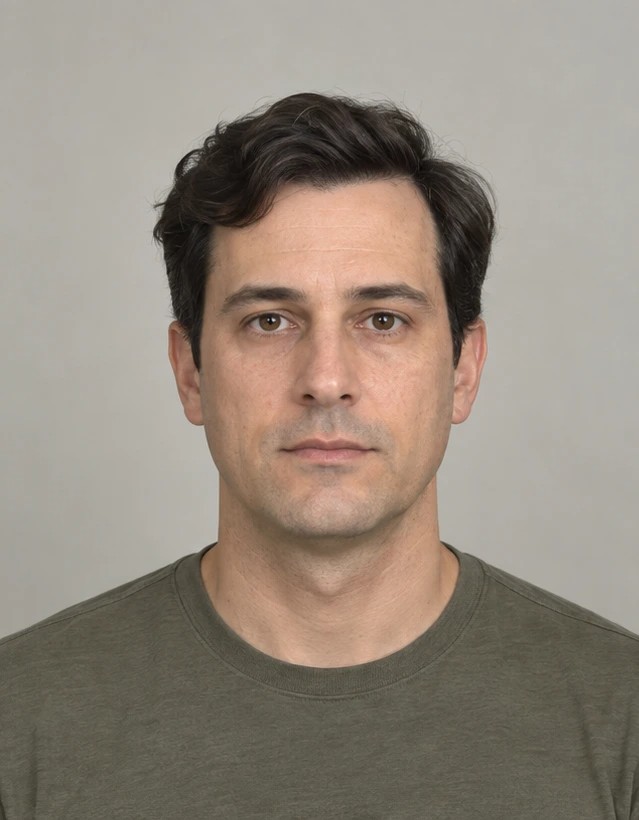


PSL Scale Wiki / Midface anatomy
Flat Maxilla: Signs, Causes & What You Can Change
Flat Maxilla describes a flatter-looking central face in online appearance discussions. Understand the anatomy behind the term, compare visible proportions, and choose a useful next step with PSL Scale’s photo tools.
01 / Flat Maxilla anatomy
What is a Flat Maxilla?
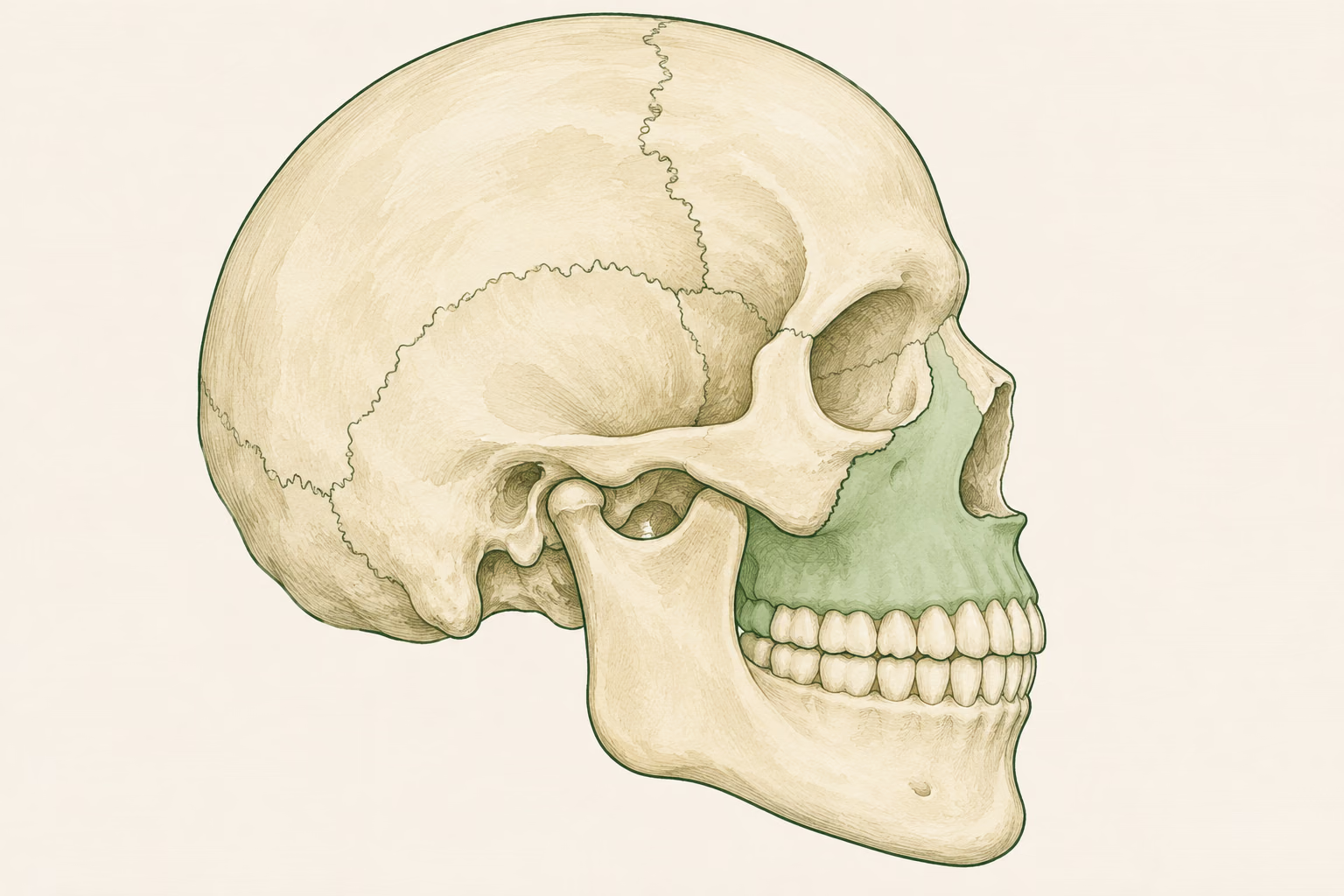
Flat Maxilla usually means that the region beside the nose and above the upper lip looks relatively flat. In looksmaxxing discussions, Flat Maxilla is often used interchangeably with “recessed maxilla.” The distinction matters: one describes an impression, while the other describes a possible skeletal relationship.
The maxillae are the paired bones forming the upper jaw, holding the upper teeth and contributing to the hard palate, nose and eye sockets. Their position matters to facial structure, but a Flat Maxilla impression does not isolate those bones from the rest of the face.
A Flat Maxilla photo captures the surface over that framework. The cheekbones, lips, dental position and soft tissue contribute to the outline too. Use Flat Maxilla as a starting question about appearance, rather than a label that proves underdevelopment or predicts your health.
References: OpenStax, Anatomy and Physiology.
Flat Maxilla anatomy: maxilla vs mandible
The maxilla forms the upper jaw; the mandible forms the lower jaw and chin. A defined mandibular corner can coexist with a Flat Maxilla impression. Conversely, a less prominent chin can change the apparent balance of the midface without establishing that the upper jaw is recessed.
This is why a jawline score cannot answer a Flat Maxilla question by itself. PSL Scale’s Jawline Analyzer describes visible lower-face geometry. A fuller picture also considers the central face and profile, with each measurement tied to the view that produced it.
| Region | Anatomical role | What a photo can show |
|---|---|---|
| Maxilla / upper jaw | Supports upper teeth; contributes to palate, nose and orbit. | Surface relationships around the nose, upper lip and midface. |
| Mandible / lower jaw | Supports lower teeth and forms the chin and jawline. | Visible jaw width, jaw corners and chin outline. |
| Zygomatic / cheekbone | Contributes to cheek prominence and the orbit. | Cheek contour, influenced by pose and soft tissue. |
References: OpenStax, Anatomy and Physiology.
Flat Maxilla vs recessed maxilla: appearance and position
A Flat Maxilla appearance and maxillary retrusion are related search topics, but they are not equivalent findings. Retrusion concerns position relative to other skeletal structures. Flatness may describe local contour or a photographic effect. Neither a straight profile nor a single reference line establishes a universal normal.
When comparing a Flat Maxilla with a more projected midface, keep the same viewpoint. Forward projection is depth; upper-jaw width is a separate dimension. A narrow palate, a long-looking midface and a Flat Maxilla impression therefore ask different anatomical questions.
| Flat Maxilla comparisons | Question it raises | What it does not establish |
|---|---|---|
| Flat Maxilla | Why does my central face look flatter? | A skeletal diagnosis from appearance alone. |
| Recessed maxilla | Is my upper jaw positioned relatively far back? | A finding that an uncalibrated selfie can confirm. |
| Narrow maxilla vs Flat Maxilla | Is the upper dental arch or jaw too narrow? | That increasing width will correct forward projection. |
| Long midface vs Flat Maxilla | How tall does the central face look? | That vertical proportions reveal hidden skeletal depth. |
What does a Flat Maxilla look like in a photo?
People searching for Flat Maxilla often notice a flatter cheek-to-nose transition, less prominent upper-lip support or a midface that appears behind the chin. These are observations to describe, rather than a checklist that diagnoses the bone underneath.
Under-eye shadows are especially easy to overinterpret in Flat Maxilla comparisons. Light direction, pigmentation and soft-tissue contours can affect that region. A negative orbital vector describes a relationship between the eye and surrounding contour; it does not independently diagnose upper-jaw retrusion.
Avoid “good vs bad maxilla” rankings when reviewing a Flat Maxilla photo. A face is a combination of features, and normal variation is broad. A useful assessment explains which view supports an observation and where uncertainty remains.
What causes a Flat Maxilla appearance?
A Flat Maxilla impression can reflect underlying skeletal relationships, inherited facial variation or the surface contours over the bones. Growth and dental history also belong in a clinical discussion. A Flat Maxilla photograph cannot identify which factor caused the appearance you notice.
Online explanations of Flat Maxilla frequently blame mouth breathing, posture or childhood habits with more certainty than a selfie allows. Persistent nasal obstruction deserves assessment on its own merits. Do not infer a breathing disorder, assign blame to past habits or promise forward growth from an appearance label.
Photographic causes need attention too. A close camera, tilted head or strong overhead light can change perceived facial balance. Before treating Flat Maxilla as a fixed structural finding, compare consistent images and check whether the impression survives those changes.
How to review a Flat Maxilla side profile responsibly
For a Flat Maxilla photo review, aim to document what is visible. Take one clear frontal image and separate left and right profiles, without forcing the jaw or tongue into a new position. Keep the lens at face height and avoid taking the camera extremely close.
A Flat Maxilla side profile is most useful when the nose, lips, chin and jaw outline are unobstructed. Let the head rest naturally rather than lifting the chin for a sharper jawline. Record the camera distance and lighting so later comparisons answer the same question.
- Use a neutral expression, relaxed lips and even light. Move hair away from the cheek and jaw outline.
- Keep front and profile images separate. Head rotation changes how cheek projection and facial depth appear.
- Describe the observation: “the upper-lip region looks less projected in this view” is more precise than declaring a Flat Maxilla diagnosis.
- Compare like with like. A changed pose or different lens distance is not evidence that a Flat Maxilla has developed or improved.
Explore a Flat Maxilla question with PSL Scale tools
Start a Flat Maxilla exploration by choosing the question you actually want to answer. The free Facial Ratios Calculator measures frontal proportions and shows their landmarks. Its midface ratio compares iris-center distance with the distance from their midpoint to the upper lip. That is a two-dimensional ratio, not a projection measurement.
The Jawline Analyzer adds context to a Flat Maxilla impression by showing visible lower-face proportions and jaw-corner estimates. Use it to understand the mandible’s surface outline alongside the midface. It cannot tell you how many millimeters the upper jaw should move.
For a broader Flat Maxilla discussion, preview the Face Report. It combines a front view with two profile views and separates proportions, lower-face observations, profile and presentation. Check the sample and current pricing before ordering; observations from side photos remain visual interpretations.
No PSL Scale output is a Flat Maxilla diagnosis or an instruction to seek surgery. Read the overlays and limitations before reading a score as a verdict. The useful outcome is a clearer description of the photo and better questions for a professional if you have functional concerns.
Explore midface ratio, eye spacing and lower-face share with visible measurement guides. Depth is outside this measurement.
Try the free ratios calculatorInspect the visible jaw corners and jaw-to-cheek width. Compare the lower face without inferring upper-jaw position.
Open the Jawline AnalyzerSee how a multi-view report organizes proportions, profile observations and presentation, with a limitation for each section.
Preview the Face ReportReady to compare views? Start a Face Report or check current report pricing.
How to fix a Flat Maxilla: match the option to the goal
“How to fix a Flat Maxilla” can mean improving a photograph, changing dental alignment or treating a skeletal discrepancy. Those goals need different approaches. If your concern is presentation, experiment with camera distance, even lighting, hairstyle and frames; these change visual framing rather than upper-jaw position.
For a Flat Maxilla concern involving a bite problem, an orthodontist evaluates the teeth and jaws together. Braces and aligners move teeth; they should not be assumed to advance the entire adult upper jaw. Treatment planning depends on the actual finding, not an internet category.
Palatal expansion addresses a narrow upper jaw. It is not a general Flat Maxilla treatment for forward projection. Age and skeletal maturity influence options, and adult expansion requires individualized assessment. A width problem and a position problem should not be treated as interchangeable.
Orthognathic surgery can reposition jawbones for selected discrepancies that orthodontics alone cannot resolve. For a Flat Maxilla searcher, that is context rather than a recommendation: the decision requires an orthodontic and maxillofacial evaluation, with discussion of benefits, recovery and risks such as infection, altered sensation and relapse.
References: American Association of Orthodontists; Cambridge University Hospitals, NHS.
Can mewing or exercises fix a Flat Maxilla?
There is no established evidence that mewing reliably advances the adult upper jaw or fixes a Flat Maxilla. The American Association of Orthodontists says research does not support the claimed jawline benefits. A tongue-resting habit is not a substitute for a treatment plan.
Do not use forceful tongue pressure, DIY expanders or aggressive chewing as a Flat Maxilla correction. Unsupervised attempts can affect teeth or the bite. If tongue function or nasal breathing bothers you, discuss that specific issue with a qualified clinician rather than promising yourself a different bone structure.
References: American Association of Orthodontists.
When does a Flat Maxilla concern need professional assessment?
A Flat Maxilla appearance alone does not establish a need for treatment. Seek a dental or orthodontic evaluation if your teeth do not meet comfortably, chewing is difficult, or the bite has changed. Persistent breathing or sleep symptoms also deserve appropriate medical assessment independently of facial appearance.
A clinician investigating a Flat Maxilla concern reviews history, the bite and facial relationships, then decides whether imaging or other records are indicated. Cephalometric measurements can contribute to that assessment, but no isolated angle, forehead line or AI score replaces the whole evaluation.
References: Cambridge University Hospitals, NHS.
Flat Maxilla FAQ
What is a Flat Maxilla?
Flat Maxilla is an informal appearance term for a flatter-looking central face. It may prompt questions about midface projection, but it does not prove upper-jaw retrusion. A clinical diagnosis requires assessment beyond a photograph.
Is Flat Maxilla the same as a recessed maxilla?
No. Flat Maxilla describes an impression; a recessed maxilla describes relative upper-jaw position. Soft tissue, cheekbones and camera conditions can create flatness without establishing skeletal retrusion.
How can I tell if I have a Flat Maxilla?
Consistent front and profile photos can help describe a Flat Maxilla impression. They cannot confirm hidden bone position. If you also have a bite or functional concern, an orthodontist can assess the teeth and jaws together.
Can mewing fix a Flat Maxilla in adults?
There is no established evidence that mewing reliably corrects a Flat Maxilla or advances the adult upper jaw. Forceful tongue pressure should not replace professional assessment or supervised treatment.
Can braces or expansion fix a Flat Maxilla?
The answer depends on the actual problem. Braces align teeth, while expansion addresses upper-jaw width. Neither should be assumed to correct the forward projection behind a Flat Maxilla impression. A specialist determines the appropriate options.
Can AI diagnose a Flat Maxilla from a selfie?
No. AI can describe visible features and calculate defined surface ratios, but a selfie cannot establish a Flat Maxilla diagnosis. PSL Scale’s tools explain photo geometry and its limitations; they do not provide clinical skeletal measurements.
Does a short midface ratio rule out Flat Maxilla?
No. Midface ratio describes defined distances in a frontal image, while a Flat Maxilla concern often involves depth. A compact-looking midface does not establish how far forward the upper jaw sits.
Which PSL Scale tool should I use for a Flat Maxilla question?
For a Flat Maxilla question, start with the free Facial Ratios Calculator to understand frontal proportions. Use the Jawline Analyzer for lower-face context, or preview the multi-view Face Report for broader visual observations. None diagnoses upper-jaw retrusion.
Flat Maxilla sources & editorial notes
Original Flat Maxilla guide by PSL Scale Editorial. Educational content, not an individual treatment plan. This article has not been medically reviewed.
- OpenStax, Anatomy and Physiology: 7.2 The Skull
Anatomical reference for the upper jaw, lower jaw, cheekbones and orbit.
- American Association of Orthodontists: What is a palatal expander, and what is it used for?
Explains width correction, clinical assessment and the role of growth.
- American Association of Orthodontists: Does mewing actually reshape your jaw?
Evidence limits and risks of unsupervised tongue-pressure claims.
- Cambridge University Hospitals, NHS: Jaw or chin corrective surgery: patient information and consent
Clinical indications, assessment and risks of corrective jaw surgery.
Further reading: Aura’s maxilla guide covers related search questions. Clinical statements here are grounded in the references above. The original anatomy artwork was created with OpenAI ImageGen and exported as AVIF; it is a simplified teaching illustration.