

The useful answer
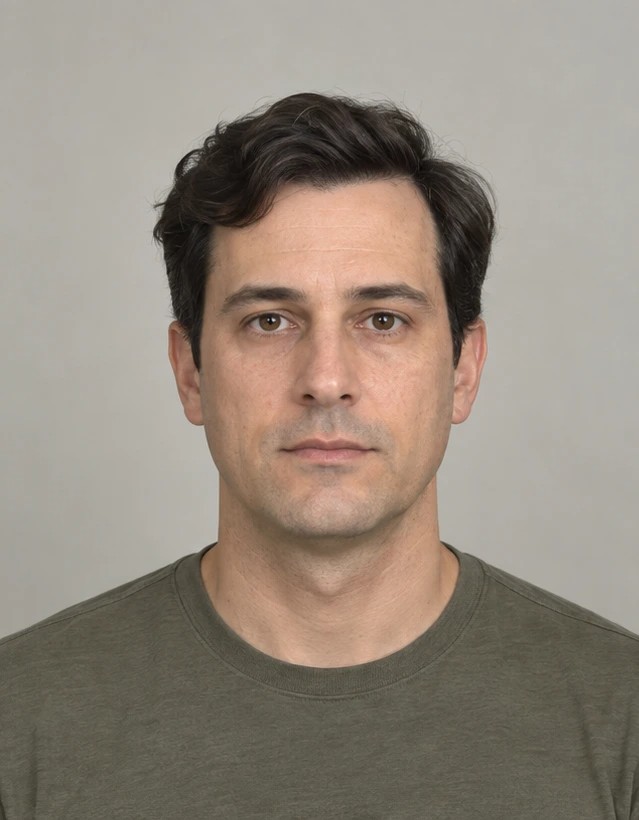
Use a clear, eye-level photo with a relaxed expression. Look at opening proportions, visible upper-lid skin, lower-lid contour, brow framing and corner tilt separately. There is no validated yes-or-no hunter-eyes test or universal cutoff.
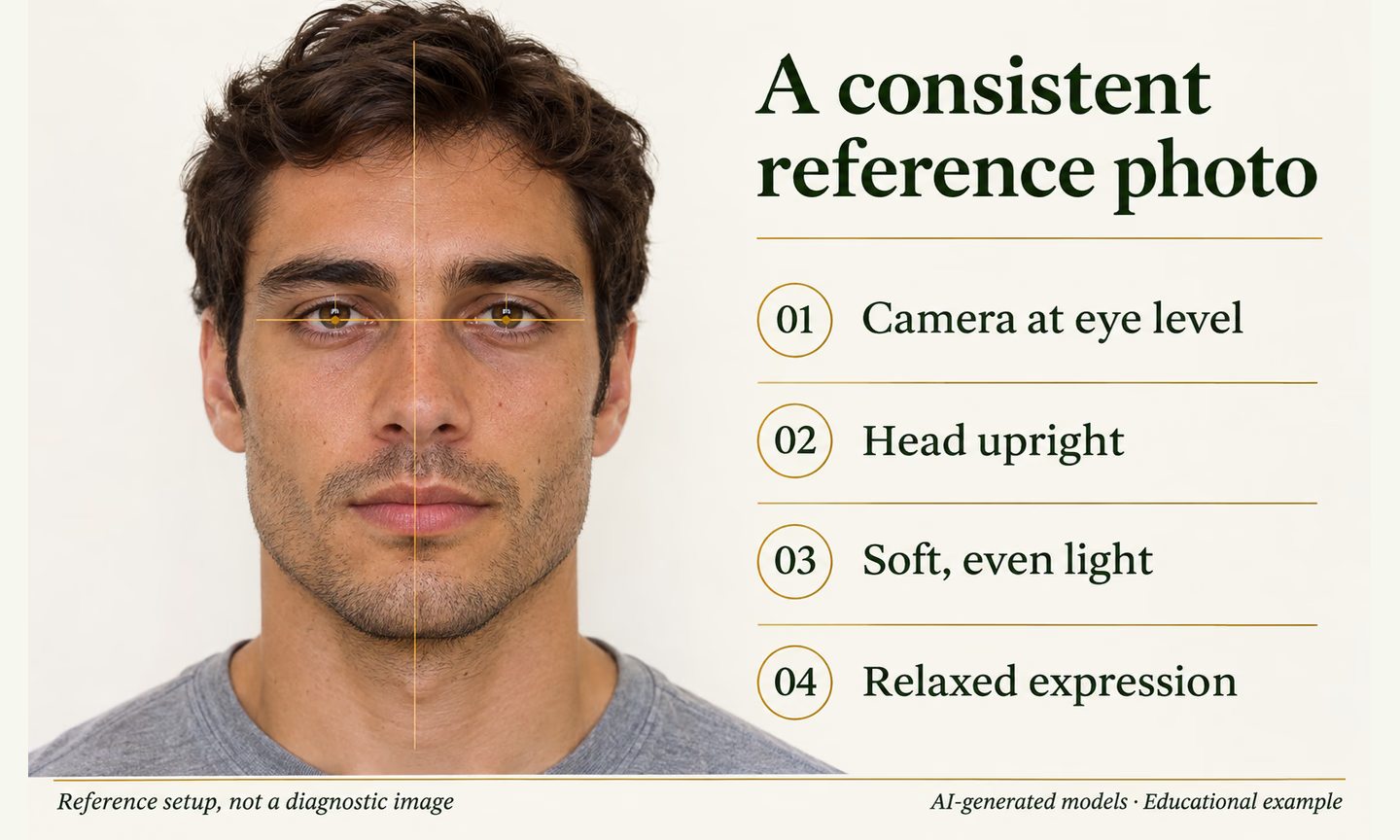
01 / FIELD NOTES
Start with a photograph you can actually compare
Face the camera with your head upright and your chin neutral. Use soft, even light and keep both eye corners visible. Remove glasses for the reference photo if you can do so comfortably, then put them back on for everyday use. Keep hair away from the brows and avoid a beauty filter.
Let your brows settle and open your eyes normally. Do not deliberately squint or widen them. Take the photo from a comfortable distance rather than an extreme close-up. A relaxed reference answers a different question from a posed “intense gaze” selfie.
If one eye looks much narrower, check whether your head is turned before interpreting the difference as anatomy. You can take a second reference under the same conditions, but endlessly repeating a test to chase a label makes the result less useful.
- Camera at eye level; head upright.
- Even light across both eyes.
- No filter, forced squint or raised brow.
- Inner and outer corners visible.
- Similar distance and expression for comparisons.
02 / FIELD NOTES
Five features to inspect, without a pass-or-fail score
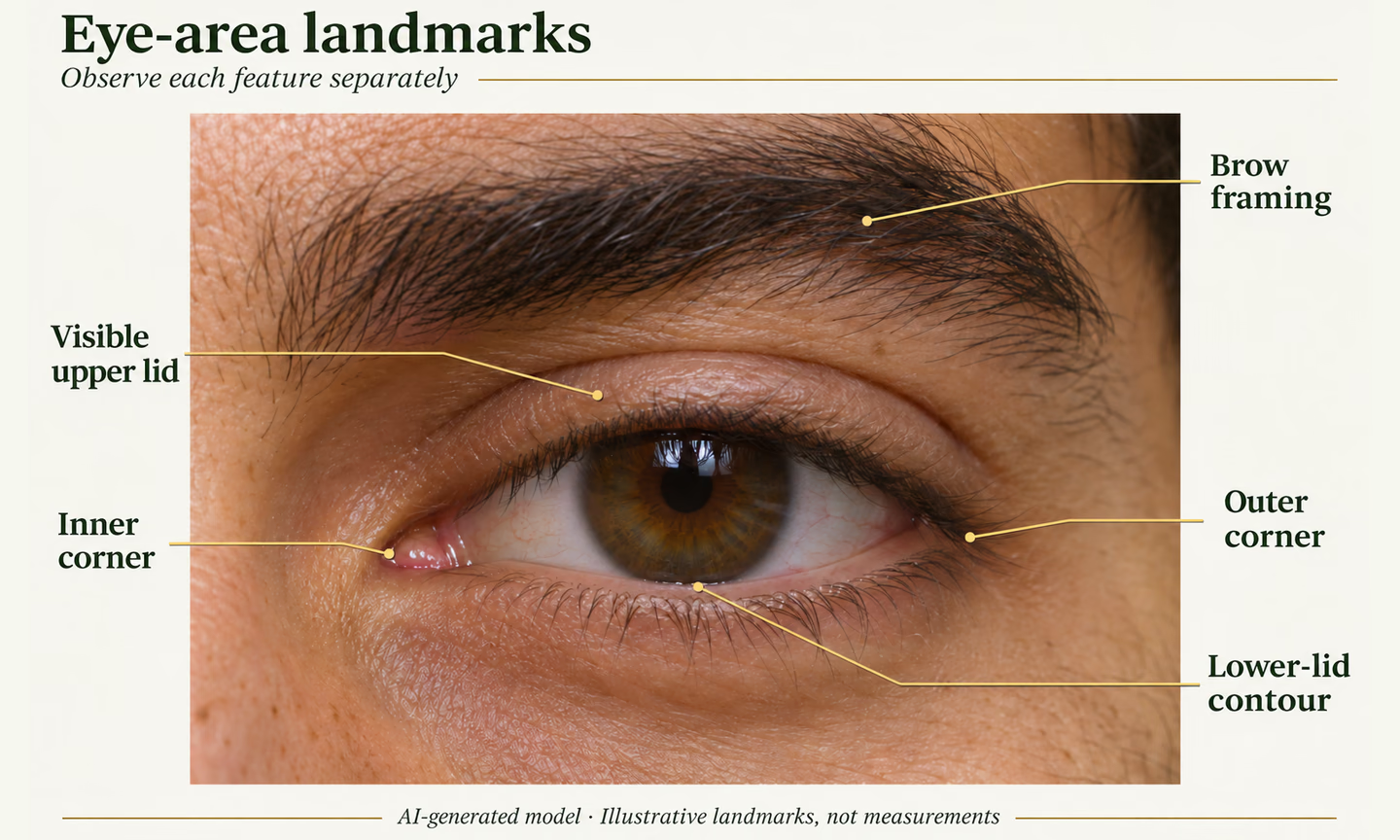
First compare the width and height of the visible opening. Then look at the lid skin above the lashes, the curve of the lower lid and the position of the brow. Finally examine the inner-to-outer corner line. These observations can coexist in many combinations.
A compact opening plus low lid exposure may resemble the common hunter eyes description, but one feature cannot settle the label. Avoid adding arbitrary points and calling the total a scientifically validated result.
| Look at | Useful observation | Common confounder |
|---|---|---|
| Opening proportions | Rounder or more elongated appearance | Squinting and head turn |
| Upper lid | Amount of visible lid skin | Brow raising and camera height |
| Lower lid | Curve and visible white beneath the iris | Smiling and eye widening |
| Brow frame | Visible brow-to-eye space and shadow | Grooming and directional light |
| Corner axis | Outer corner relative to inner corner | Head roll and obscured corners |
03 / FIELD NOTES
What can an online hunter eyes test tell me?
The Hunter Eyes tool offers a photo-based reading of your eye area. Treat its result as a description of that image. Check whether the eye outlines and corner positions look plausible before interpreting any number or label.
A photo estimate is not a clinical examination, a population rarity estimate or an objective attractiveness ranking. Lighting and expression can affect a result even when the tool detects the face successfully. Any AI commentary should be read with those same limits.
If a result surprises you, compare it with the actual visible landmarks rather than assuming the label is more authoritative than the picture. A repeatable observation such as “my outer corners appear level in this photo” is clearer than “the tool proved my tier.”
04 / FIELD NOTES
Can a selfie show deep-set eyes?
It can show an impression of depth. It cannot establish true orbital depth from a flat front view. A low brow and directional shadow can create a stronger impression without showing where the eyeball sits relative to the bony orbit.
Similarly, a “sleepy” expression does not prove a particular eye structure. If there is new drooping, pain or a change in vision, that belongs in an eye-care assessment rather than an appearance test.
05 / FIELD NOTES
Why celebrity examples are a poor personal benchmark
A selected photograph of Robert Pattinson, Adriana Lima, Speed or another public figure may illustrate a pose or a styling choice. It does not establish a permanent hunter-eyes classification for that person. Public images also vary in retouching, focal length and expression.
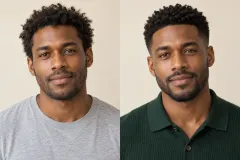
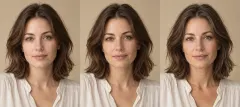
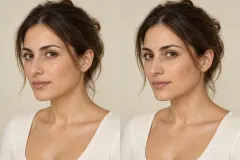
Use the labeled AI-generated models here to learn the feature names, then compare your own consistent reference photographs. If you came from an “are these hunter eyes?” joke, the meme guide explains how exaggerated expressions change the context.
A FEW MORE ANSWERS
Frequently asked questions
How do I know if I have hunter eyes with neutral tilt?
Look at opening shape, lid exposure and brow framing separately. Level corners can accompany the compact look. There is no universal tilt threshold for the internet label.
Why do I look different in the mirror and camera?
Orientation, distance, light and camera height can differ. A familiar mirrored view can also feel different from a non-mirrored photo. Compare the conditions before interpreting eye shape.
Should both eyes look exactly the same?
A perfectly matched pair is not required for a useful description. Check head turn and landmark placement first, then describe each eye rather than forcing a single category.
Explore your own eye area.
Use a clear, relaxed photograph. Read the result as a photo-based description, with the limits of the image in mind.
Try the Hunter Eyes tool