



The useful answer
There is no standardized hunter-eyes operation. Eyelid skin, outer-corner support, tissue volume and the bony orbit are different anatomical targets. Discuss a specific concern with a qualified oculoplastic or plastic surgeon; no procedure can guarantee the informal label.
01 / FIELD NOTES
Is there a surgery to give you hunter eyes?
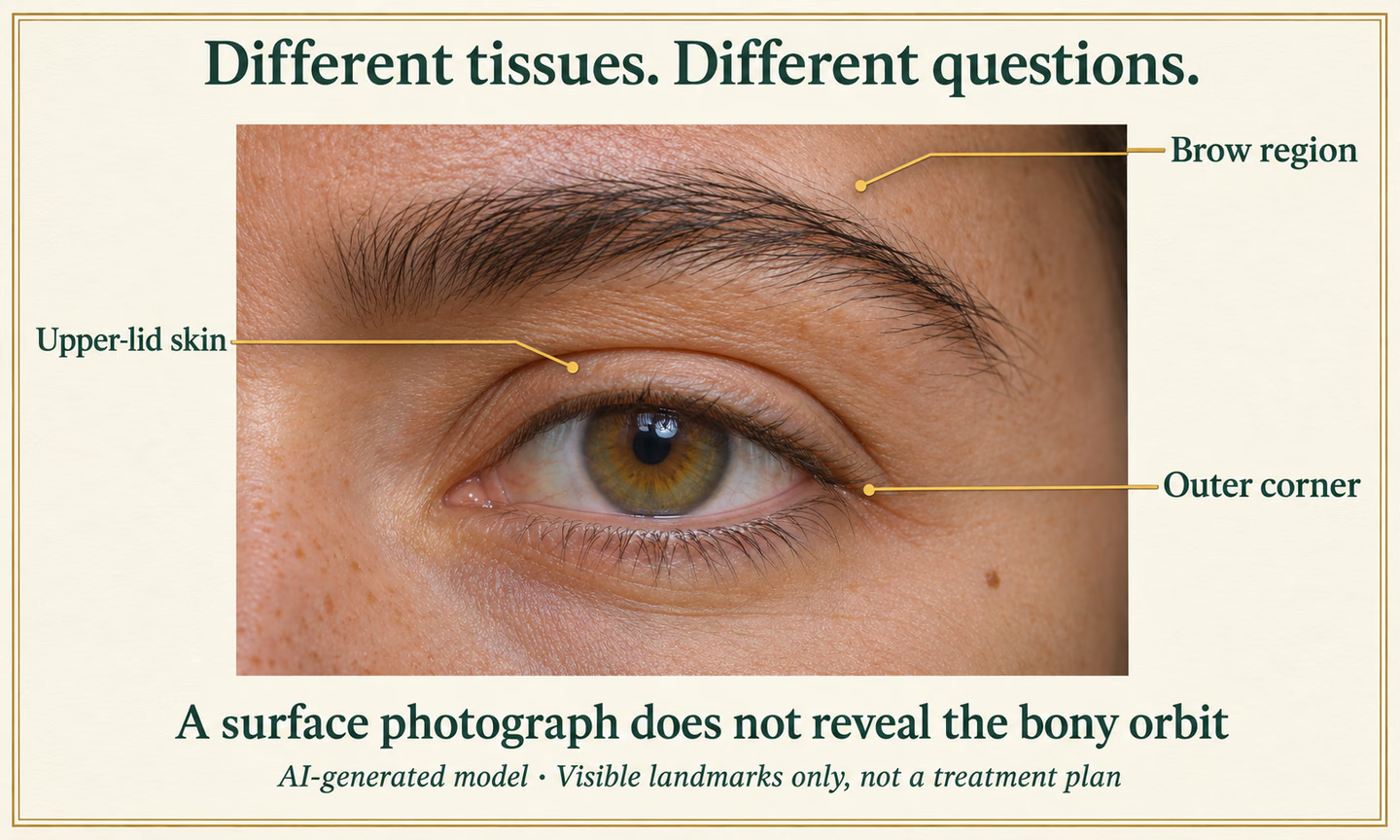
Some procedures alter eyelid appearance, but “hunter eyes” does not identify which tissue needs attention or whether any treatment is appropriate. The label combines features that can differ independently. Use it as a conversation starter only after naming the particular concern.
Blepharoplasty addresses selected eyelid skin or fat. Canthoplasty concerns eyelid and outer-corner reconstruction. These are different procedures with different indications; neither is a universal route to a social-media eye shape. Cleveland Clinic’s canthoplasty overview describes the procedure and its assessment process.
| Concern to discuss | What to clarify |
|---|---|
| Visible upper-lid skin | Skin, crease and brow position are separate contributors |
| Outer-corner position | Support, symmetry, function and realistic limits |
| Hollow or full-looking tissue | Which tissue and whether volume change is appropriate |
| Deep-set impression | Photo shadow versus actual orbital anatomy |
| Drooping or irritated lids | Functional symptoms and an eye examination first |
02 / FIELD NOTES
Can surgery push your eyes deeper?
Moving an eyeball relative to the bony orbit is not the same as changing eyelid skin or corner support. A desire for a shaded, deep-set-looking photograph does not establish a reason for orbital surgery. Do not treat “push my eyes deeper” as a routine cosmetic request.
Ask the clinician which visible feature you are noticing and whether the reference photo mainly shows a brow shadow, expression or makeup. An assessment can also conclude that there is no suitable procedure for the requested effect.
03 / FIELD NOTES
How to tell a plastic surgeon you want hunter eyes
Describe the specific feature in plain language: visible upper-lid skin, a concern about corner position or a hollow-looking area, for example. Explain whether it changes with expression and whether you have any dryness or vision symptoms. Bring relaxed reference photos rather than only edited celebrity images.
For men asking how to make that request, the process is the same: discuss the feature and desired degree of change, not an alpha-male category. Ask what can be achieved while preserving comfortable blinking, lid closure and the character of your own face.
- What anatomical feature is causing the appearance I notice?
- Would any treatment be appropriate, including doing nothing?
- What change is realistic in a relaxed face?
- How might treatment affect dryness, closure and symmetry?
- What are the risks, follow-up needs and possible revision costs?
04 / FIELD NOTES
Will fat grafting or lipofilling give me hunter eyes?
There is no type of fat grafting that universally creates the label. Adding volume above or below an eye is a different target from changing opening proportions or corner support. Suitability depends on the actual anatomy and the clinical assessment.
Searches such as “ile kosztuje lipofilling pod oczy i nad oczy aby uzyskac efekt hunter eyes” ask about the cost of volume treatment above and below the eyes. That still requires a local, procedure-specific consultation. A price or a before-and-after photo does not determine whether volume treatment fits your concern.
05 / FIELD NOTES
Eye reshaping surgery: what does the cost include?
There is no meaningful universal hunter-eyes surgery price because it is not one procedure. Country, clinician, procedure scope, facility and anesthesia can all change the quote. An advertised amount may also cover a different intervention from the one you are considering.
Request an itemized quote for the exact proposed procedure, including clinician and facility fees, anesthesia if used, appointments and the policy for complications or revisions. Avoid comparing a simple eyelid quote with an orbital or combined-procedure quote as if they bought the same result.
06 / FIELD NOTES
Risks and the limits of a permanent result
Cleveland Clinic lists risks including bleeding, infection, scarring and unsatisfactory results for canthoplasty. The American Academy of Ophthalmology’s eyelid-surgery material also discusses dry-eye and eyelid-function concerns. Ask the clinician how the risks apply to the proposed procedure and your eyes.
A lasting tissue change is not a guarantee of a particular look, and healing and aging still matter. If your goal is simply a different photograph or makeup outline, start with the reversible-options guide. A neutral self-check can also help distinguish the feature from its presentation.
A FEW MORE ANSWERS
Frequently asked questions
Can you make your eyes hunter by surgery?
A procedure may change a specific feature, but no procedure guarantees the informal combination. Suitability and likely results require an individual assessment.
Does upper blepharoplasty always reduce visible lid space?
No universal hunter-eye effect follows from that procedure name. The result depends on the starting anatomy and the proposed changes. Ask the surgeon to explain the expected relaxed appearance.
Is a simulated hunter-eyes result a surgical prediction?
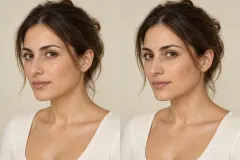
No. An edited image can illustrate a preference, but it cannot establish feasibility, safety, healing or the final result.
Sources & editorial notes
Sources support the specific context described below. The hunter-eyes label itself is informal; this article has not been clinically reviewed.
- Cleveland Clinic — canthoplasty
Procedure overview, assessment and risks. It does not promise hunter eyes.
- American Academy of Ophthalmology — eyelid surgery
Patient information about eyelid procedures and their limitations.
Explore your own eye area.
Use a clear, relaxed photograph. Read the result as a photo-based description, with the limits of the image in mind.
Try the Hunter Eyes tool