

The useful answer
The informal hunter-eye description is not exclusive to men, women or any ancestry. Almond shape, monolid crease pattern, hooding and corner tilt describe different features and can overlap. Describe the individual eye area instead of inferring its shape from identity.
01 / FIELD NOTES
What is hunter eyes in men?
For men, the phrase usually refers to the same compact opening, limited visible lid skin and close brow frame described in the main hunter eyes guide. Online discussions sometimes add masculine or alpha-male language, but a brow position cannot establish personality or dominance.
A broad brow, a narrow opening and an intense expression are distinct observations. A posed photograph can combine them even if the resting face looks different. “Hunter eyes man” and “hunter eyes in men” are searches for the same general description, not separate anatomical categories.
02 / FIELD NOTES
Can women have hunter eyes?
Yes. The visible traits are not male-only. Searches for hunter eyes women, a girl with hunter eyes or hunter eyes girls often concern elongated openings, close framing or a particular makeup look. None requires a separate female measurement threshold.
Foxy-eye makeup can create an extended outer outline, while “bedroom eyes” and “sleepy eyes” describe impressions. A makeup effect, a relaxed expression and an anatomical feature are different explanations for a similar photograph. Choose styling you enjoy without treating a narrow opening as a requirement.
03 / FIELD NOTES
Can you have monolids and hunter eyes?
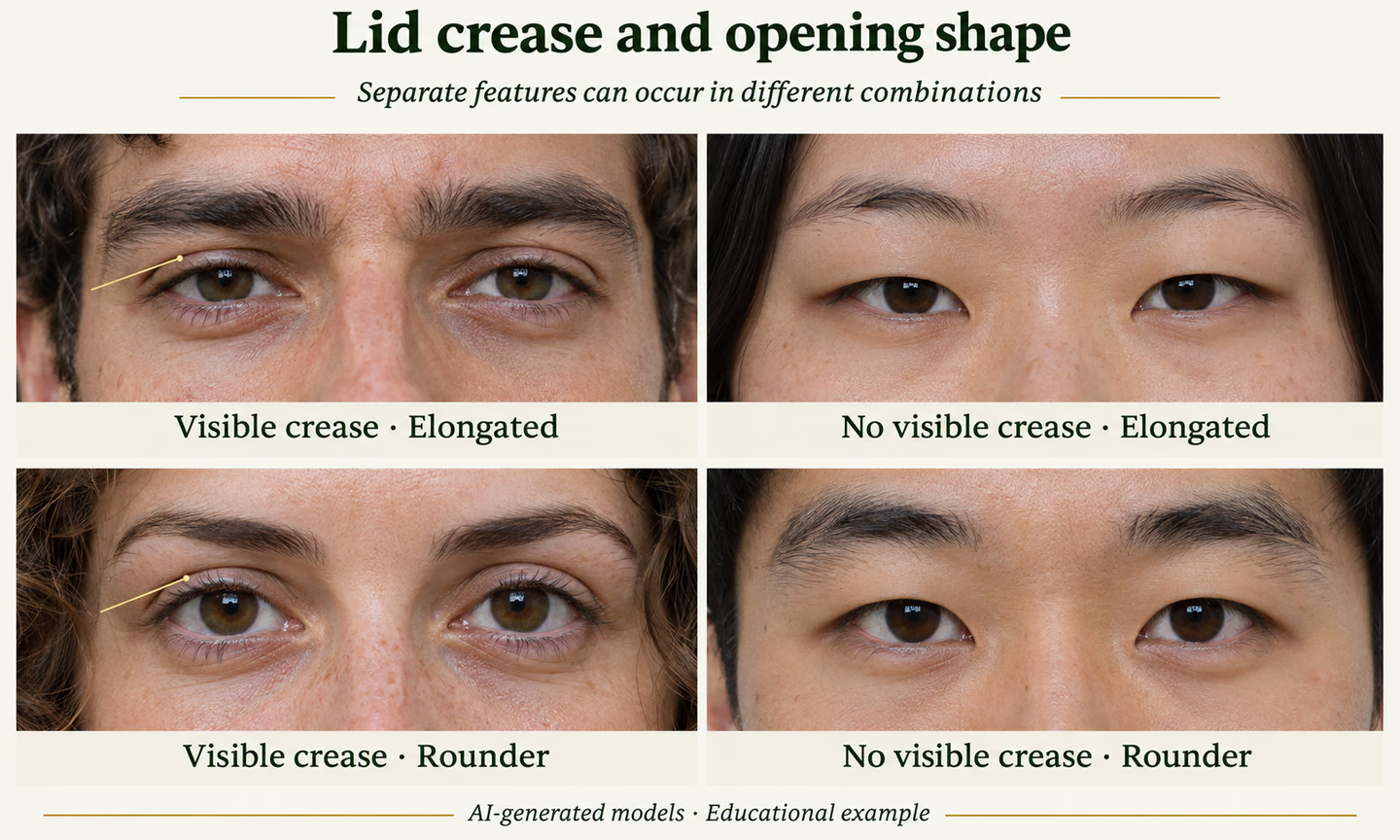
Yes, the descriptions concern different features. Monolid usually means an upper eyelid without a clearly visible crease. Almond or elongated refers to the outline of the visible opening. A single crease pattern does not determine the opening’s width-to-height relationship.
An epicanthal fold concerns skin near the inner corner; it is not simply another name for every monolid. Hooding refers to skin overlapping the crease. These features can overlap, so a careful description is more useful than sorting every eye into one exclusive box.
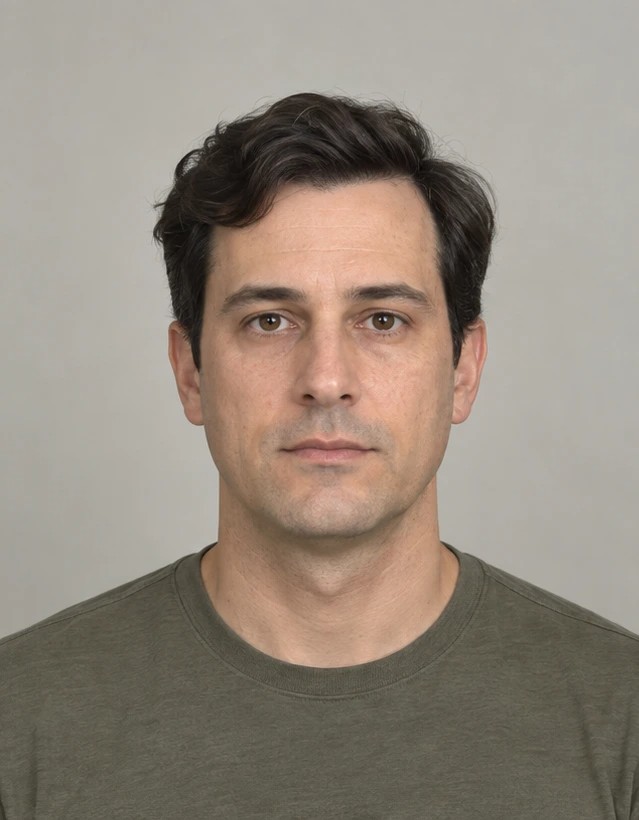
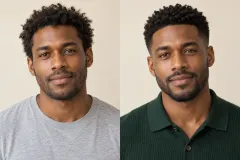
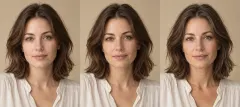
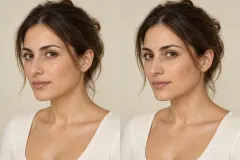
The four AI-generated photographic examples show different combinations of opening shape and crease visibility. The labels describe visible features rather than assigning eye shapes to genders or ancestries.
04 / FIELD NOTES
Asian hunter eyes and Black men with hunter eyes
Neither “Asian” nor “Black” identifies one eye shape. People within any broad identity group vary in opening shape, lid folds, brow placement and the other features used in the informal label. A search phrase cannot stand in for an individual observation.
If you are looking for examples because your lid fold differs from a tutorial’s model, compare the relevant feature: visible crease, outer-corner outline or brow space. Adapt a removable styling reference to your own anatomy rather than assuming that one ancestry-specific tutorial applies to everyone.
05 / FIELD NOTES
Almond, hooded, deep-set or hunter: which term helps?
Use almond for an opening that appears elongated with tapered ends. Use hooded for skin that overlaps a crease. Use deep-set-looking for the impression in a photograph when you cannot establish anatomical depth. Use hunter only when you mean the informal combination, with its uncertainty made clear.
For example, “almond opening with a visible crease and level outer corners” conveys more than “low tier hunter eyes.” If you want to check your own photo, the self-check guide separates those observations. If you want a comparison of opening shapes, see hunter eyes vs prey eyes.
| Term | What it describes |
|---|---|
| Almond | Visible opening outline |
| Monolid | Upper-lid crease pattern |
| Hooded | Skin overlapping the crease |
| Canthal tilt | Inner-to-outer corner axis |
| Hunter eyes | An informal combination of appearances |
A FEW MORE ANSWERS
Frequently asked questions
Do all Asian people have monolids or hunter eyes?
No. These are individual visible features, and neither an ancestry label nor a monolid crease pattern determines the entire eye area.
Can Black men have the compact hunter-eye look?
Yes, the informal description is not ancestry-specific. Evaluate opening proportions, lids and brows in an individual reference photo.
Are hunter eyes women with foxy eyes makeup showing a permanent change?
Makeup changes the outline and shading. It does not demonstrate a change to the eye corners or orbit. Compare the relaxed face without makeup if anatomy is the question.
Sources & editorial notes
Sources support the specific context described below. The hunter-eyes label itself is informal; this article has not been clinically reviewed.
- Cleveland Clinic — eyelid anatomy and function
Background on eyelid structures and expression; not a validation of hunter-eye labels.
Explore your own eye area.
Use a clear, relaxed photograph. Read the result as a photo-based description, with the limits of the image in mind.
Try the Hunter Eyes tool