

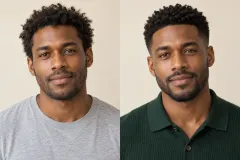

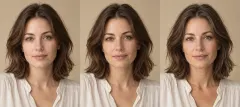
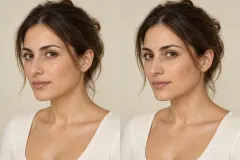
The useful answer
Yes. Glasses change how the eye area is framed and seen through the lenses; they do not erase the underlying opening or lid shape. Wear the vision correction you need and judge a frame by fit, comfort and your own preference.
01 / FIELD NOTES
Do glasses ruin hunter eyes?
No. A frame can cover a crease, echo a brow line or draw attention away from the eye corners. Those are presentation effects. The compact-looking traits described as hunter eyes do not disappear when someone puts on glasses.
The more useful question is whether the frame gives you the look and comfort you want. A photograph taken through a strong lens or with glare is also a different reference from a clear photo without glasses. Do not confuse the quality of that reference with the shape underneath.
02 / FIELD NOTES
Choose the frame around your eyes, not a label
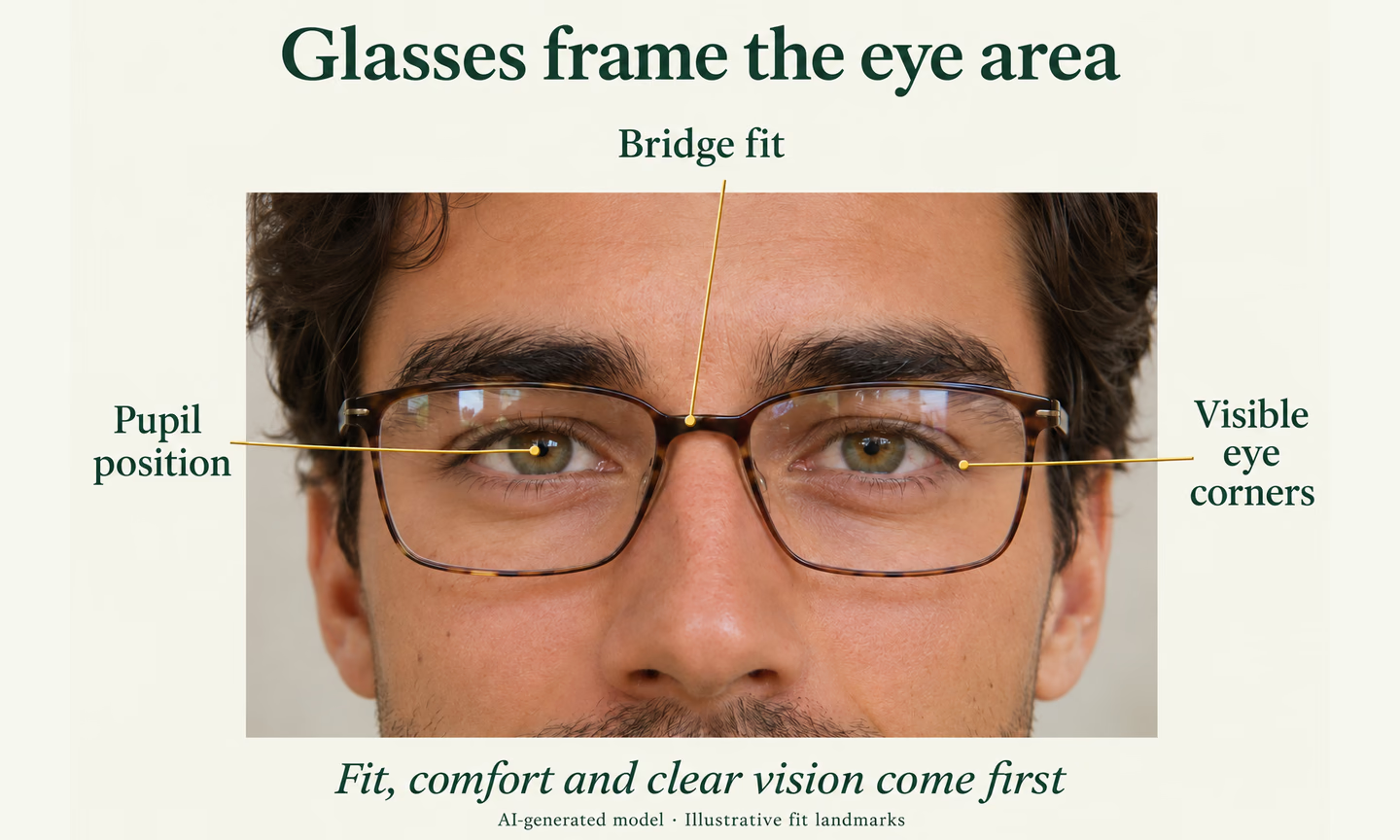
Try frames with your eyes relaxed and your head in its usual position. Look for comfortable bridge support, enough room for the lashes and a width that sits well on your face. Have an optician check fit and lens placement; appearance is only one part of a useful pair.
A relatively straight upper rim may repeat a brow line. A thinner rim may leave the lids and corners more visible. A rounded frame can create a different contrast. These are styling possibilities, not rules proving that one shape is correct for every compact eye area.
Use the glasses for face shape guide for broader frame proportions. If the whole face is visible, frame width and balance may matter more to the overall effect than whether a small patch of eyelid skin is covered.
- Check bridge and temple comfort first.
- Look at pupil and lens placement with an optician.
- Try both a lighter and a stronger upper rim.
- Compare in ordinary light, with a relaxed expression.
- Choose the pair you like wearing, not only photographing.
03 / FIELD NOTES
Why eyes can look different behind the lenses
Corrective lenses can alter apparent size and shape in a photograph. The prescription, lens design, viewing angle and distance from the eye all affect what the camera sees. Reflections may obscure one corner entirely, especially with a bright screen or window in front of the lens.
That means a photo-based tool can describe the photographed lens effect or miss an outline. It does not mean the glasses changed your resting anatomy. Avoid comparing a close-up with glasses to a distant photograph without them and attributing every difference to your eyes.
04 / FIELD NOTES
How to take a useful reference with glasses
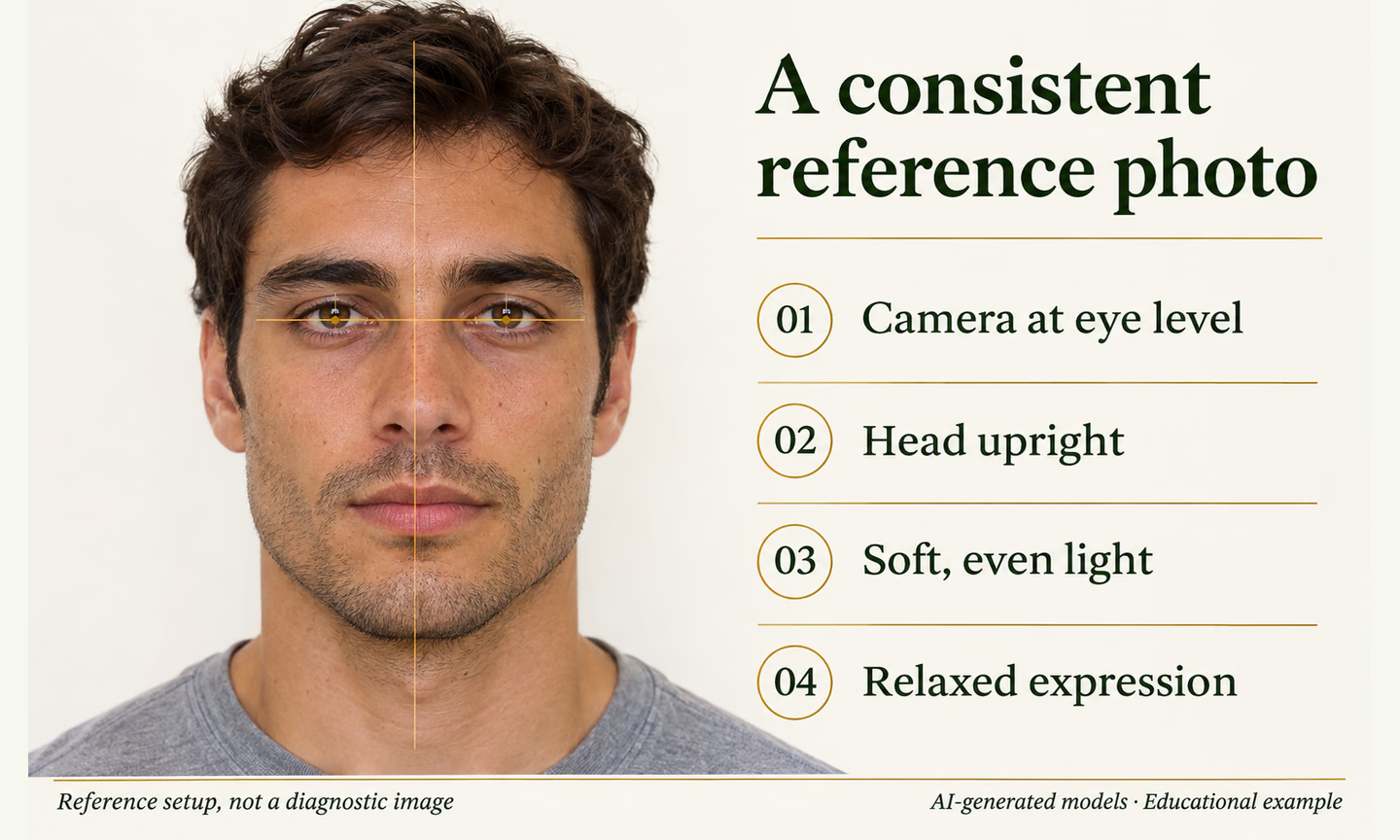
For an eye-shape self-check, a clear reference without glasses is usually easier to interpret if you can remove them comfortably. Keep the camera at eye level and do not alter the pose to find a stronger-looking angle.
Then take a second image wearing your usual pair for the styling question. Keep the light, distance and expression similar. If glare hides the eye corners, adjust the light source rather than forcing a squint. Put your glasses back on for activities where you need them.
A FEW MORE ANSWERS
Frequently asked questions
Can u have hunter eyes and wear glasses every day?
Yes. The informal label describes visible eye-area traits; it does not require going without corrective lenses.
Should I switch to contacts for hunter eyes?
That is a vision-care and comfort choice, not a requirement for an appearance label. Discuss suitability with your eye-care professional if you are interested.
Can an AI tool analyze my eyes through glasses?
It may be able to detect them, but reflections, rims and lens distortion can obscure the landmarks. A clear reference without glasses is easier to assess when comfortable to take.
Explore your own eye area.
Use a clear, relaxed photograph. Read the result as a photo-based description, with the limits of the image in mind.
Try the Hunter Eyes tool